Season two of A Thousand Blows streams on Disney+ from 9th January 2026 and I can’t wait for you to see it. As per season one, I worked as a historical consultant on the show alongside Hallie Rubenhold.
While inspired by real people, much of the characters’ biographical detail and almost all of the storylines in seasons one and two are entirely fictional – they are the creation of a brilliant team of writers.
When season one aired in February 2025, there was overwhelming interest in the real people and real stories behind the show. My original research blogs were used extensively by journalists covering the show, often with credit (cheers!), sometimes without (boo!), and occasionally misinterpreted entirely and not corrected when I asked…
166,000 of you have so far come to read my blogs, some of which are many years old. I am still overwhelmed by it!
In what is essentially an interview with myself, you will find the answers to some questions you might have about season two and what actually happened to the real Hezekiah Moscow and Henry ‘Sugar’ Goodson.
There will be some minor show spoilers here, so I suggest having a good binge watch this weekend THEN reading this article.
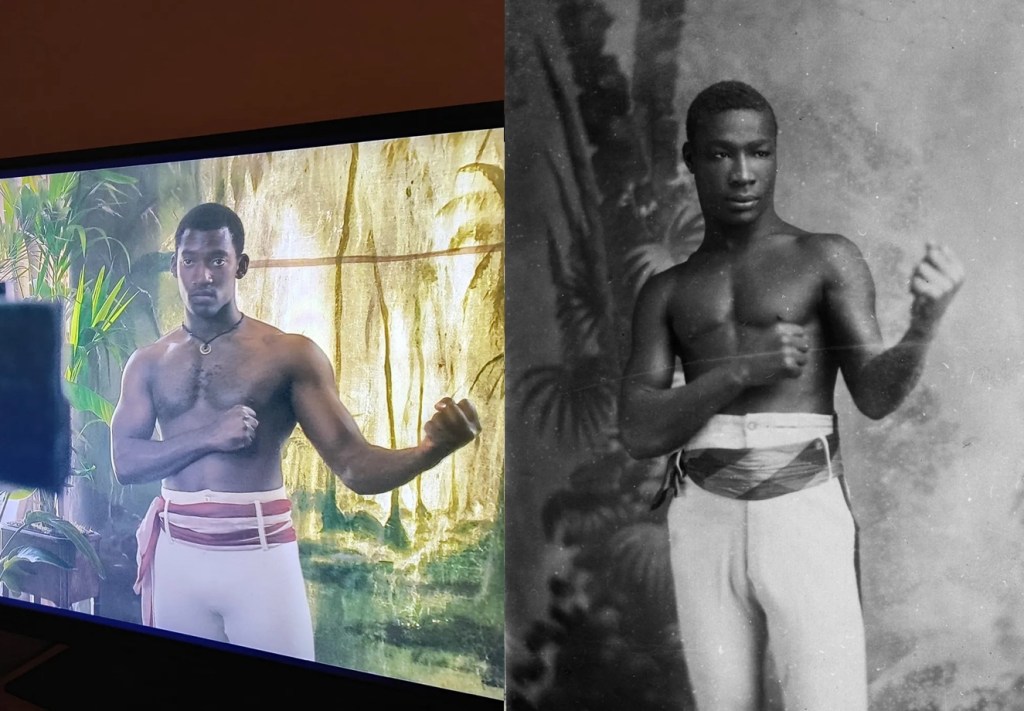
You can find a similar blog I wrote for season one, here, which will contradict some of the ‘facts’ shared by some of the cast and crew around season one regarding the real Moscow’s background and why he came to London, for example.
If there is anything else you would like to know, please leave a comment…
Or wait until Spring 2027, when it will all be in my book!: THE DEVIL’S DANCE FLOOR – Hezekiah Moscow and The Fight for Life in Late-Victorian London.
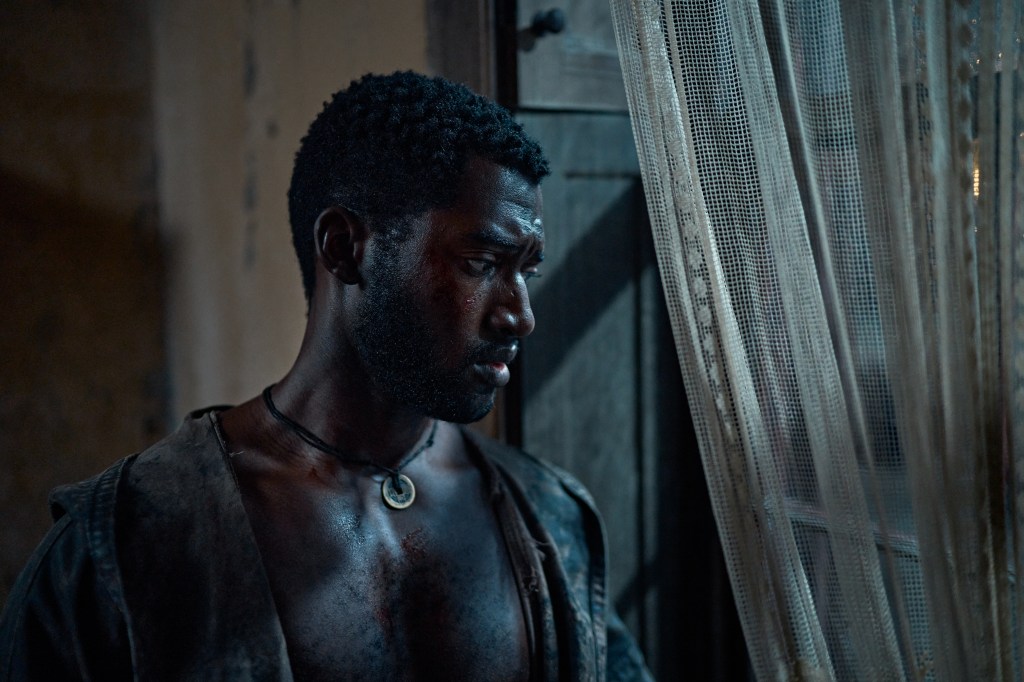
Did Hezekiah Moscow really seek revenge for Alec Munroe’s murder?
Not to my knowledge. In real life, Alexander Hayes Munroe was killed in 1885 (about three years after season one of A Thousand Blows is set) by a young man called Thomas Hewington, following late-night drunken comments in the kitchen of the common lodging house where they were both staying. Hewington stabbed Munroe once with a tobacco knife and Munroe died a couple of days later in the London Hospital from infection.
Despite multiple witnesses, and Hewington himself admitting he did it, he was found not guilty of manslaughter and went free. There is no evidence that Moscow and Hewington knew each other (although, they might have done) or had any interactions later on.
We know from newspaper reports that after Munroe’s death, Moscow went to his friends at the newly-formed Professional Boxers Association and asked them to help fundraise for a gravestone. They gladly did so, and you can still find that stone today, half buried in partly-collapsed earth under a tree in Manor Park Cemetery. I popped by recently, cleared some litter and said hello.
We do know that Moscow was devastated about Alec’s death – at a boxing event soon after, he was seen to be emotional and thanked the audience for honouring Alec.
Episode five of A Thousand Blows season one was my favourite, but I do wish Alec had got to come with us into season two – Francis Lovehall was so good in the part, and deserved a bigger one.
My forthcoming book explores Alec Munroe’s life, boxing career, and death in as much detail as I’ve managed to find.
Going back to season one quickly – did he actually kill anyone, and get banned from boxing in the West End?
Hezekiah Moscow never killed anyone intentionally or accidentally, or get banned from boxing in the West End. This was definitely creative licence at work! He boxed and performed in music halls across London and the country from 1882 – 1892.
There are definitely some real historical events which support the end of season one, where a punch to ‘Buster Williams’ killed him in the ring. Boxing was, is, and always will be extremely dangerous.
To highlight just a few examples: deaths had long occurred during or shortly after bareknuckle fights; In 1890 a teenager named Arthur Knight was killed just a couple of minutes into gentle sparring with a friend (both gloved), at a boxing night in Clerkenwell MCd by Hezekiah Moscow and Tom Tully. It turned out he was epileptic, and should never have been anywhere near a boxing ring; In 1897, lightweight Walter Croot was killed in the final round of a gloved 20-round match at the National Sporting Club.
I’ve previously written on the accidental death of a man at Felix Scott’s boxing booth in the early 1900s, and I’m aware of other British boxing booth deaths too (including a man who died a couple of days after being punched while drunk by Black American boxer Tom Rooney). Both Rooney and Scott were cleared of manslaughter and continued their boxing booth careers.
Did Hezekiah Moscow train Prince Albert Victor, son of the Prince of Wales?
Definitely not! But there are several elements of truth supporting this storyline.
For example, we know that the Prince of Wales enjoyed boxing – in 1887 during a visit to the UK by World Heavyweight Champion John L. Sullivan, a private boxing and wrestling event was organised for the Prince and his friends, which was promptly leaked to the press and caused something of a scandal: largely because of the reported ‘casual’ exchange of friendly conversation between Sullivan and the Prince.
During this conversation, the Prince supposedly mentioned that Albert Victor liked to punch the bag every morning in training. Boxing training was very common for young men in the 1880s as exercise, and popular for gentlemen in the upper classes, but men like Albert Victor would not have participated in a public competitive match, as you might see in A Thousand Blows season two. The ‘closed for private event’ sign you will see outside the match venue in the show was included to help mitigate that.
Moscow was a popular boxing trainer, mostly working in East London’s pub boxing gymnasiums with young boys and men living in the area. He was coaching just two years after starting boxing himself! He later, briefly, went on to become a well-known trainer (or professor) of boxing in the Midlands, and was a co-founder of the Nottingham Amateur Boxing Association in 1886.
Moscow was one of several Black boxers in the 1880s managing boxing gymnasiums, with others including Felix Scott from Barbados and Tom Tully, who was born in England. ‘The Gentlemen’s Instructor’ Edward ‘Plantagenet’ Green – a former bareknuckle prizefighter who had arrived from Barbados in the 1850s – was still active in the 1870s and 1880s, and was well known for training in his rooms in central London. Upper class men – albeit perhaps not princes – might have engaged someone like Green as a private boxing coach.
Did Hezekiah Moscow have a friendship with Victoria Davies?
Victoria Davies was the daughter of Sarah Forbes Bonetta, the Nigerian-born goddaughter of Queen Victoria. She was born in 1863, so was a contemporary of Hezekiah Moscow. As a young, upper class woman educated at Cheltenham Ladies College, it is very unlikely that she would have had any interest in boxing or presence at boxing matches. Aliyah Odoffin is brilliant playing Davies in the show, but this storyline is entirely fictional and there is no evidence of interaction between Davies and Moscow.
The storyline regarding the royal family offering Moscow family land back in Jamaica was also created for the show. As I’ve previously discussed at length (and will do so even more in my book) – I have never found firm evidence that Moscow was from Jamaica. I have previously published a few thoughts about why he might have been from another island in the West Indies.
Recent research by another historian, Paul McNeil, makes a persuasive case for Jamaican heritage, however! Check out Paul’s May 15th 2025 blog, ‘The Real Lives of “A Thousand Blows” Part 1 Hezekiah Moscow’. My book will contain further discussion on this subject.
Were there actually bareknuckle matches on barges in 1880s London?
The barges shown in A Thousand Blows season two make a gritty exciting backdrop, but I am not aware of any such venues in the 1880s. Special boats were hired to carry boxers and spectators down the Thames to out-of-the-way locations for fights. Despite a crackdown from the government and police from 1880, bareknuckle fights continued to take place well into the twentieth century. More commonly, you would find them out in fields in Kent, for example, or sportsmen would travel as far as Bruges for a high profile championship match sans-gloves.
The real Hezekiah Moscow was never a bareknuckle boxer. He had over 120 matches that we know of, mostly three-round exhibitions, three-round tournament matches, a few longer Queensberry Rules professional matches, and lots of music hall performances, all with the gloves. Once or twice he did use very light 2oz gloves and engage in fights for endurance (for example, 33 rounds with Jack Stevens in 1891).
Did Hezekiah Moscow actually go to New York?
I’ve found one reference to Moscow planning to travel to America in the mid 1880s (a little while after the action in A Thousand Blows seasons one and two), for reasons not known but it would have likely been to try his hands at boxing over there, perhaps in New York. Or maybe he was planning to visit ‘home’, wherever home may have been originally, in the Caribbean. For reasons again unknown, he does not appear to have actually gone: his name is attached to boxing events in London just a couple of weeks later and then throughout the year.
In 1892, Moscow left the lodgings he shared with his new wife Mary (NOT Mary Carr!) and their nine month old baby, Eliza, and was never seen again. The mystery attached to his disappearance will be explored in detail in my book. A few years later, a fellow boxer reported that he had seen Moscow ‘half starved and friendless’ working as a dock guard in New York. This comment was reported in a sports newspaper. This is the only evidence we have of him being there: I have never found travel documentation under any spelling of Hezekiah Moscow or any of his many pseudonyms, but he may have travelled under another name. I have never found any newspaper mentions of him boxing or entertaining in the United States under any of his known names, nor anything like a death record.
Who is the Black American boxer he meets at the end there?
At the end of A Thousand Blows season two, you’ll meet a boxer visiting from the United States. I love the introduction of this character and his scenes with Moscow, as he tries to persuade him to compete in the US. This character is fictional, but with elements drawn, I believe, from Peter Jackson, the Australian Black World Champion of the later 1880s who visited the UK a couple of times. He’s also got more than a dash of Frank Craig, who arrived from New York in 1894 two years after Moscow’s disappearance (and stayed).
The real Peter Jackson and Hezekiah Moscow never sparred – Jackson was over 6ft 1 and 14 stone while Moscow was 5ft 7 and under 10 stone!
Were there actually explosions or does Steven Knight just kinda have a fetish for gratuitous explosions?
I mean, both of these things can be true. Something that A Thousand Blows tries to do – and it is TOUGH given each season has only six episodes and so many great characters – is paint some of the social picture of London in the 1880s, around the main action. This includes, for example, the ‘gentrification’ of the East End, the physical impact of work such as matchmaking and the poverty of the ‘match girls’, and terrorism. There were definitely explosions in 1880s London. Have a Google for ‘French Anarchists’ and ‘Fenian Dynamiters’ to find out more.
Speaking of Steven Knight, he recently referred to the real Hezekiah Moscow in an interview as ‘a heavyweight champion’. Is this true?
Definitely not. The lad weighed about nine and a half stone in his prime. I’ve no idea where some of these things come from. Buy my book etc etc.
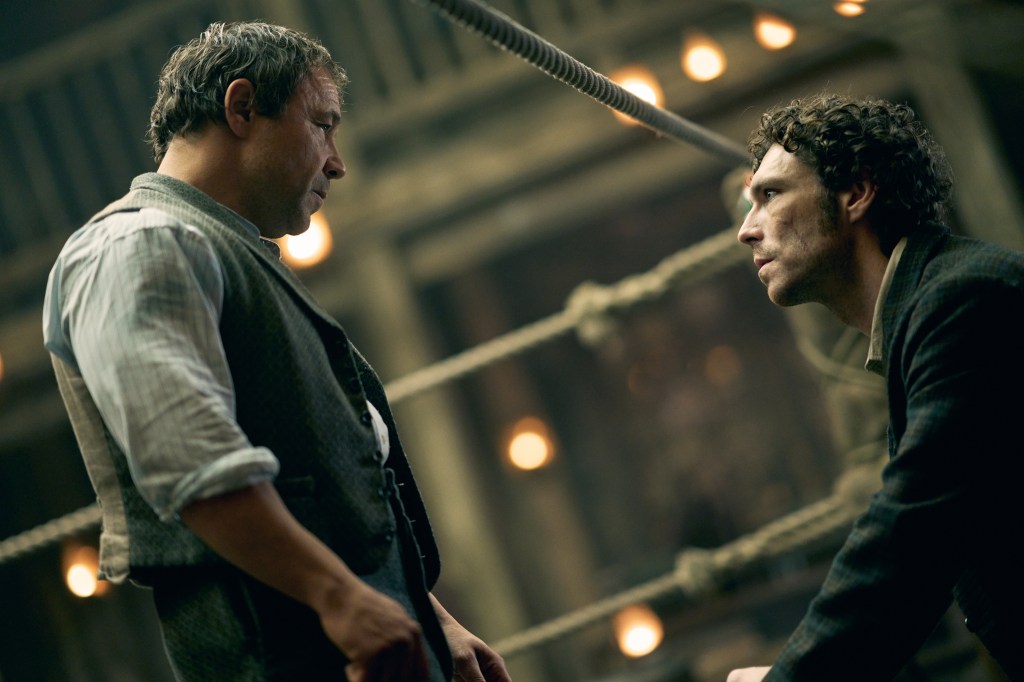
What were the real Henry ‘Sugar’ Goodson and Bill ‘Punch’ Lewis up to during the early 1880s?
Sugar had a big fight in a chapel in 1882 which was broken up by police and made headlines across the country. A year later, he was arrested for assaulting his brother Edward Goodson – not Treacle. Confusingly, the character in A Thousand Blows played by James Nelson Joyce is called Edward ‘Treacle’ Goodson. In real life, Treacle was Thomas Goodson. Edward was another one of their brothers. Edward didn’t turn up at Worship Street police court to press charges.
Sugar and his wife’s son Arthur died as a baby in 1883, and another son John was born soon after. Goodson continued to box throughout the 1880s. He got in trouble with the law again in 1884 for a prizefight fight in a barn near Woolwich against Bill England, and in 1885 took part in a heavyweight tournament (despite being only 5ft 5 ¾ and 11 stone!) which was won by the ‘manufactured’ English Heavyweight Champion Jem Smith.
Hezekiah Moscow, Sugar Goodson and more than fifty other men were founding members of the Professional Boxers Association in 1885.
Punch Lewis dropped dead from heart disease in 1883, less than two years after opening the Blue Coat Boy’s boxing saloon. He was in his late 30s. And on that note:
A Thousand Blows streams on Disney+ from 9th January 2026
The Devil’s Dance Floor: Hezekiah Moscow and The Fight for Life in Late-Victorian London (a working title) by Sarah Elizabeth Cox will be published by Duckworth in the Spring of 2027.


 Rediscovering the wrestlers and boxers of Late-Victorian London
Leave a reply to Paul McNeil Cancel reply