I first started researching Hezekiah Moscow (initially known to me only as Ching Hook) in early 2019. My first blog – the most visited post I have ever written, and will probably ever write – began with an explanation of how and why I first became interested in Moscow, and explained with bemusement that, at that time, it seemed no one else had tried to piece together his story. If they had, it was not accessible online.
To briefly recap, in 2019 you could see Moscow’s photo online – it had been digitised by the National Archives, who hold the original picture. It was available to view on their website alongside the caption ‘Ching Hook in fighting attitude’. The image had been shared by the Migration Museum and a website about ‘historical hotties’. It was taken by a man named Harry Carpenter and was dated 1888. Searching the internet and other sources like academic journals for information on Hook had brought up nothing else. So I set about writing.
Download the full Hezekiah Moscow ring record by Kevin Batchelor
After publishing some research on Moscow, his wife and child, and fellow West Indian boxer Alec Munroe, I was approached by the National Archives Education team and they turned my findings into a resource pack called The Boxers of Whitechapel.
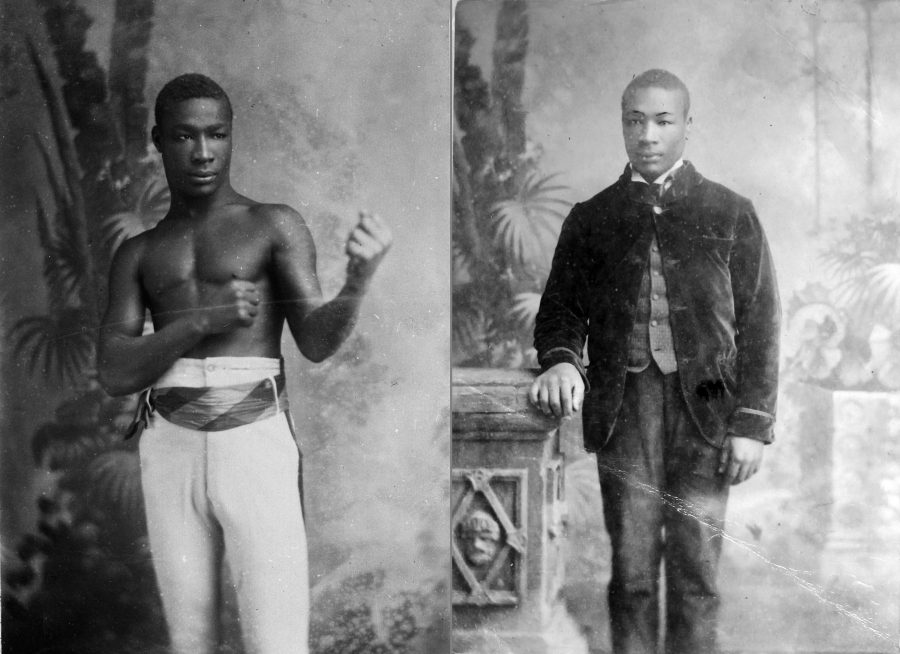
So for several years now, GCSE pupils up and down the country have been learning about Caribbean and Irish migration to Whitechapel and the life and times of two pugilists I feel both extremely protective of, while simultaneously determined to share them with as many people as possible. Kids and their teachers have, on occasion, got in touch with me to present their theories about where Moscow disappeared to in 1892. Jack The Ripper aficionados have even dragged him into conversation on their forums.
After researching Moscow and Munroe and seeing the interest they held for others, I then started trying to piece together the stories of other Black American or Caribbean-born boxers in their circle of 1880s London boxers, including Albert Pearce, Jack Davenport, Felix Scott, Jem Haines, and the Sisters Mills.
At some point soon after the National Archives project, our enigmatic ‘mystery man’ Moscow caught the attention of actors Hannah Walters and Stephen Graham, who took his photo to Steven Knight.
As Professor David Olusoga explained to writer Jason Okundaye in February 2025 – the week A Thousand Blows first streamed – it is my research which inspired the depiction of Hezekiah and Alec on screen.
Naturally, there has been a huge wave of interest in Moscow’s real story, following the show’s airing on Disney+ and the claims of show creator Knight and others that “not much is known about him”.
Earlier this year, a number of journalists published short articles, largely cribbed from my blogs. Others shared misinformation and stories confused with the imagined Moscow and his fictional life written for the TV show. It is certainly true to say that we know little of his personality, his voice, his feelings or aspirations. But myself, and now others, have spent well over half a decade diligently working on trying to figure the guy out. And we’ve found out a lot. And 150,000 of you have come to my website to read about him.
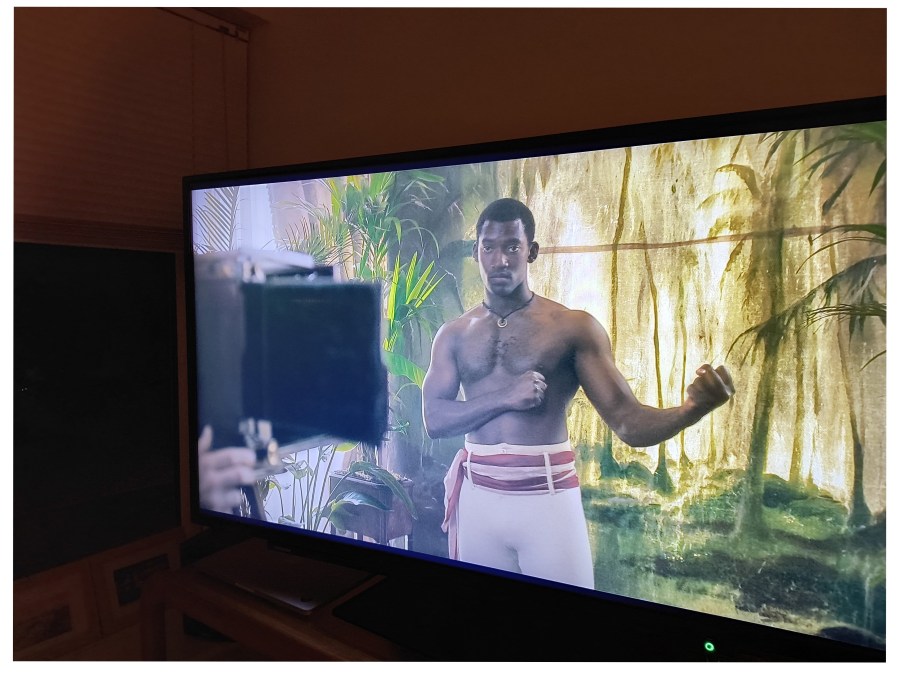
This year I have published a few articles on this blog, spoken to a few journalists, and recorded a couple of podcasts addressing some of this confusion, and discussing the real Moscow and Munroe. I have also been focused on writing my forthcoming book, in which the stories of both men will feature heavily.
Just six years after I started to research Moscow, it has been incredible to see so many people take interest and even better to see others pick up the research baton and run with it.
While I have long remained sceptical that Moscow was Jamaican, and it is not necessarily certain that his ‘real’ name was even Hezekiah Moscow (I explain why in one of my previous blogs, and go into more detail in my book), a recent piece of research by Paul McNeil, published on his Time Detectives blog in May 2025, makes a compelling case for a Jamaican background.
Paul used his incredible genealogy skills to locate a family with the surname Mascoe who were from St Andrew’s, Stoney Hill, Kingston, Jamaica. There were several men in this family who, during the 1800s, were named Ezekiah, and several of them travelled overseas. McNeil’s article also presents further details about Moscow and his wife Mary Ann’s story which I had not included in my earlier posts but had been holding back for my book! It’s a brilliant read.
And then, earlier this summer I was contacted by 76-years-old retired local government Principal Librarian Kevin Batchelor, who recently self-published a 626 page book chronicling, in incredible detail, the history of the Belsize Boxing Club – for eight decades, the oldest amateur boxing club in the world.
Kevin describes the club, which was founded in 1882, as ‘The Toffs’ institution which transformed boxing’ and over the course of his work, very much proves the case for it. Fully illustrated, his book contains the most comprehensive analysis of the evolution of amateur boxing ever published and never-before published records of the contests and exhibitions of late nineteenth and early twentieth century icons of amateur boxing.
It describes the development of the amateur sport, following the demise of prize fighting to its social acceptability by the ‘New Victorians’, who introduced the amateur sports of rowing, athletics, cricket and boxing.
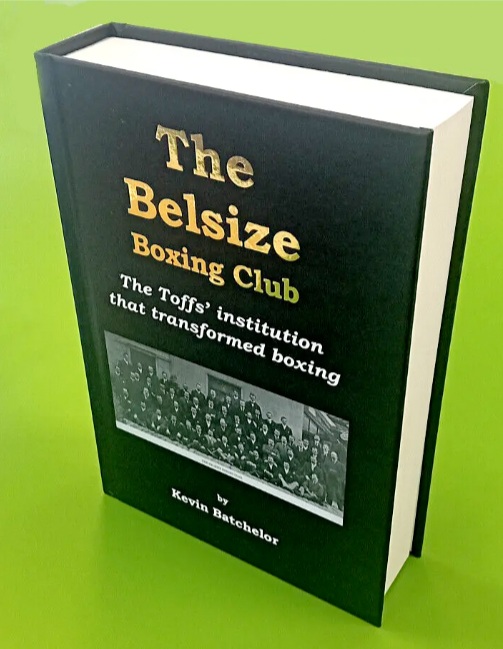
The Belsize Boxing Club, founded on 31 August 1882, pioneered pro-am exhibitions, often featuring professional luminaries of the day, such as Ted ‘Kid’ Lewis and Bombardier Billy Wells, alongside amateur novices and open competitions. On 15 December 1891 one such exhibition featured Hezekiah Moscow against Belsize novice E. Davey.
The Belsize Boxing Club soon became the most influential boxing club in the world. The club’s members were Oxbridge and London University graduates, served in the armed forces, and in many cases went on to become leaders in their fields:
- Club Captain Peggy Bettinson later co-founded the National Sporting Club.
- Rufus Isaacs (later Lord Reading) joined the club in the 1880s, and went on to become Lord Chief Justice of England, and Viceroy of India.
- J.W.H.T. Douglas, 1905 ABA middleweight champion, won the middleweight boxing gold medal at the London Olympics of 1908.
- Val Barker, 1891 ABA heavyweight champion, is remembered now for giving his name to the Val Barker Trophy, awarded to the most stylish boxer at the Olympic Games.
- Former Star class, internationally famed referee Harry Gibbs was a club instructor in the 1950s.
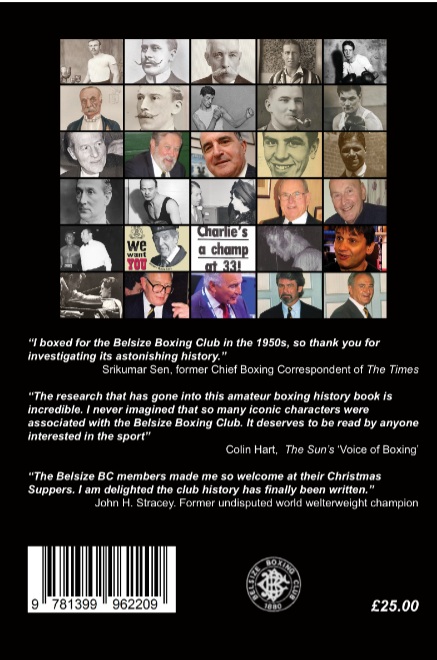
‘The Belsize Boxing Club: the Toffs’ Institution that Transformed Boxing’, is commended by former club boxer and The Times boxing correspondent Srikumar Sen, Colin Hart, ‘The Sun’s Voice of Boxing’, and former world welterweight champion, John H. Stracey.
Its 30-page index contains 3,500 entries. The untold history of this Corinthian amateur boxing club, and its remarkable members touches on the lives of over 400 sporting notables from the prize fighting era to the late twentieth century, including Hezekiah Moscow.
Published by The Ludo Press Ltd, it is available by contacting Kevin Batchelor at kevinabatchelor@gmail.com. It costs £20, plus £4 p&p.
You can read a review of it here on the Boxing News website
Hezekiah Moscow – who always, to my knowledge, boxed as Ching Hook or Ching Ghook and never as Moscow – performed at a Belsize annual display, although he was not a full member of the club.
Kevin, who has not seen A Thousand Blows, has spent many, many, hours trawling the British Newspaper Archive in order to compile a full ring record for Moscow.
Download the full Hezekiah Moscow ring record by Kevin Batchelor
This is a project which I had begun myself some years ago, putting my information into a spreadsheet which has since disappeared into the ether of bad Google Drive management or old work laptops.
However, my research – focused, as it is, more on the personal stories, the out-of-ring action, and the life and times in London of my subjects – did not require me to finish it or publish the full list. My book will also be offering a broader social history of its subjects and will focus less on the minute of their ring careers, so there is sadly no space for full ring records, even as footnotes.
Kevin’s fascination with the never previously published records of 19th century amateur boxers prompted him to research the record of Moscow, who, though nominally a professional boxer, took part in over 70 exhibitions, including the Belsize BC’s 10th Annual Display at the Eyre Arms Assembly Rooms, St. John’s Wood, on 15 December 1891.
After discussion with Kevin, who does not have his own website, but who is slowly developing a Belsize BC site – we decided to publish the ring record here in its entirety, with each entry illustrated by accompanying newspaper clippings.
The ring record is accompanied by further information about Moscow and his family right into the 1960s and the death of his daughter Eliza Moscow. The 45-page document references my research and Paul’s, and is extended by Kevin’s own investigations in the newspaper archives and other historical records.
I’m enormously thankful to Kevin for allowing me to publish it here.
It makes a brilliant companion piece to the research myself and others have been sharing in recent years. And it will be a fun read for those of you who may only have come to Moscow through A Thousand Blows, where he is creatively depicted as a 6ft heavyweight professional boxer and a rapidly rising star who took the pugilistic world by storm and could have been a world champion. The reality is rather different:
Kevin shows Hezekiah Moscow to have entered the ring on 113 occasions. 72 of these matches were exhibitions. Of the remaining matches, he won 17, lost 23, and one was a draw.
Kevin’s book, ‘The Belsize Boxing Club: The Toffs’ institution that transformed boxing’, is available to buy directly from Kevin – and I recommend that you do. It is also available to buy on Ebay.
Please note that the PDF linked in this article is Kevin’s work. While I have read it, and I believe it to be a complete and accurate record, I have not fully fact-checked the information it contains.
 Rediscovering the wrestlers and boxers of Late-Victorian London
Leave a comment