A month has passed since the release of A Thousand Blows (to rave reviews) and, at the time of writing, 117,000 people have visited my blogs. Stats and insights tell me that the vast majority are here to find out more about Hezekiah Moscow.
As mentioned in a recent post, facts and fiction relating to Hezekiah have become blurred over the course of the TV show’s promotional campaign. For reasons I’m unsure of, creator Steven Knight and several other members of crew and cast have repeatedly told media that the real Hezekiah ‘came from Jamaica to be a lion tamer’.
An article in The Independent by Greg Evans, published on A Thousand Blows’ release date, noted that ‘according to extensive research by historian Sarah Elizabeth Cox, Moscow was a Jamaican migrant who arrived in England in the 1880s intending to be a lion tamer’. While I appreciate the name check, reference and link (and yes, my research has been extensive): at no time have I ever found evidence of Hezekiah being Jamaican, nor is there evidence to indicate that he came here intending to be a lion tamer. He did become an animal tamer shortly after arriving. There’s a difference.
While it has been frustrating to see, it has also got me thinking about his origins a bit more, and how and why it is we don’t actually know where he was from.
Please be aware that this article contains some language quoted from 1880s newspapers that is considered offensive today.
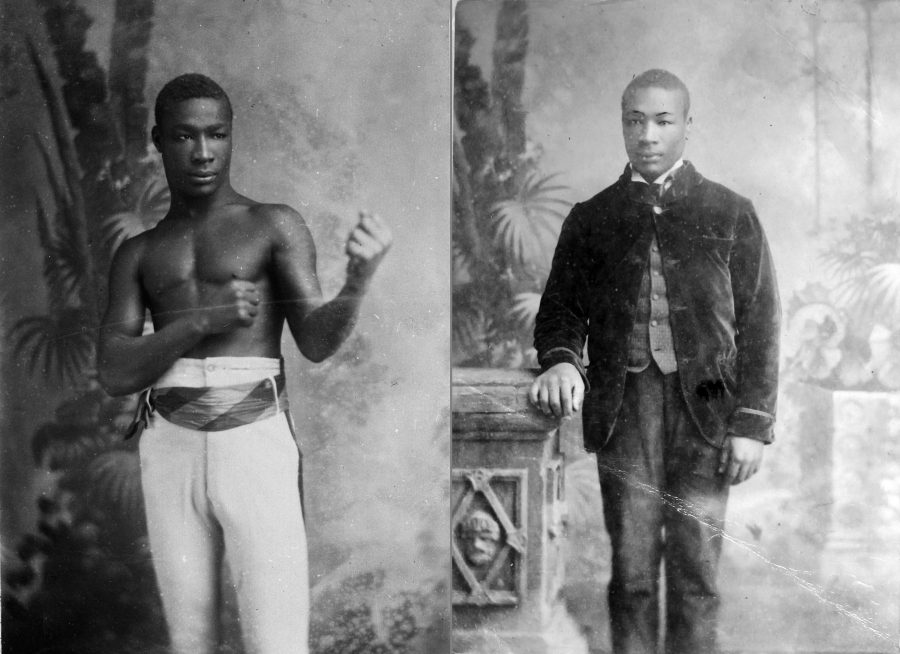
My original series of Hezekiah Moscow blogs, published in 2019, were titled ‘Where Did You Go, Hezekiah Moscow?’, referencing his mysterious disappearance from London in 1892. What’s become increasingly of interest over the past month is: Where did you come from?
The only evidence we have for Hezekiah’s place of birth or nationality is the 1891 England and Wales census. He had lived in London for nine or 10 years when it was taken. I’ve never found him on the 1881 census and believe he likely arrived at the end of that year or the very start of 1882. The 1891 census has his place of birth only as West Indies. It does not specify Jamaica. See:

Across the entire course of Moscow’s career, there are various references to his origins in relation to his skin colour but nothing particularly specific or reliable. Everything is very typical of newspapermen of the time: they might refer to Black people as ‘Ethiopian’ or ‘African’, wherever they were from.
We have the same issue with Hezekiah’s background as I have found with the Sisters Mills: these boxing women appear to be Black from the one sketch I’ve found of them. They are billed as Mexican. On one or two occasions they are referred to as South American, as Creole, as Coloured, Dark-Skinned, and as Black.
In 1882, Hezekiah was referred to a few times as the Sable or Ebony Chinaman, and the Swarthy Celestial. He is most often referred to as Black after this. He’s A Negro from the West Indies in 1883. The Prince of Coloured Boxers on one occasion in 1886. In 1890 he was described as The South American Professor.
His place of origin is never, ever – not that I’ve found anyway – given in newspaper reports consistently or accurately. That’s pretty typical for Black boxers during this time period. There is very little to be found on his background that can give us further clues. No reference to a particular accent, perhaps, or reference to any kind of shared origin in reports of sparring with Alec Munroe, who we know to have been Jamaican.
Formal paperwork, apart from the 1891 census, is thin on the ground. We have some records from the christening and school entry of his daughter Eliza Moscow, but these don’t reference her father’s nationality. We don’t have any travel records from his arrival or his departure. My theory that his ‘real’ name was not actually Hezekiah Moscow continues.
In 1921, almost 30 years after Hezekiah went missing, an article was published in the Lancashire Evening Post about famous fights of the past. In a reference to a Bill Cheese Vs Moscow match, it describes Moscow as ‘needless to say’ hailing from ‘India’s coral strand’.
I Googled ‘India’s coral strand’ and it didn’t help much. ‘From India’s Coral Strand’ is the title of a well-known hymn written by Reginald Heber, a Bishop of Calcutta, and refers to India rather than the West Indies. The term ‘India’s coral strand’ is used in newspapers in the 1920s around the time of the Lancashire Evening Post piece and much earlier, and seems to always refer to India.
So that’s it, that’s all we’ve got.
As I’ve previously said, it seems strange to me that, if Moscow was from Jamaica, it would not have said this on the 1891 census. Alec Munroe was from Jamaica and on the 1881 census it says Jamaica. Other boxers I’ve researched have been from Barbados, and their census entry says Barbados. The 1881 and 1891 census lists lots of other people born in the West Indies, who had moved to England or were British subjects returning here. Their birth places are usually more specific: Jamaica, Barbados, or it will say both an island and West Indies, ‘St Lucia, West Indies’, and ‘Haiti, West Indies’, are just two examples. Take a look at this fascinating list of 1881 Lancashire, England, residents born in Jamaica and elsewhere in the Caribbean for more examples.
Why does Hezekiah Moscow’s in 1891 just say ‘West Indies’ and not be more specific?
This week while I was meant to be doing something else very important with an impending deadline, I got distracted reading an 1886 Evening Star of the East article about a Black fire-eater. As you do.
The article regularly uses racist terminology and is quite bizarre so I’ll only quote parts of it here. The headline is THE IPSWICH FIRE-EATER. I’ll leave out the sub heading. The second sub heading is HOW HE SWALLOWS MOLTEN LEAD.
The article’s writer decided to ignore his interview subject’s real name, which he describes as a ‘Frenchy-Indian compound’ and an ‘unnecessary jawbreaker’. He gave him a nickname instead. I’ll leave that out as well.
The fire-eater was supposedly well known in Lowestoft, England, at the time. The writer describes him as coming from ‘India’s coral strand’. The writer also says, more specifically, that the fire-eater originally came from ‘the island of St Dominic in the West Indies’.
My geography isn’t great at the best of times, and I know things have probably changed quite a lot since the 1880s, so I Googled St Dominic and was given a couple of suggestions by the increasingly irritating and frequently bulls**t AI overview:
St. Dominic in the West Indies refers to both the French colony of Saint-Domingue (present-day Haiti) and the island country of Dominica in the Lesser Antilles, as well as the city of Santo Domingo, the capital of the Dominican Republic, which is also located on the island of Hispaniola.
So if the fire-eater was French-sounding with a French-sounding name, and is referred to as coming from India’s Coral Strand and St Dominic, it’s likely he was Haitian or from Santo Domingo in the Dominican Republic (the latter country joins on to Haiti, by the way, if your geography is as bad as mine). Or he was from Dominica.
And if Hezekiah Moscow is described as being from India’s Coral Strand, and from the West Indies, might he have been from Haiti, the Dominican Republic, or Dominica too?
Which brings me back to the question of him possibly being part Chinese. It’s my understanding that there were not any or many Chinese people in Haiti around 1861 when Hezekiah would have been conceived, and while there were several thousand in the Dominican Republic, it looks like they started to arrive a bit later. I’ve not found much evidence of Chinese indentured servants specifically in Dominica in the early 1860s, but it was part of the British West Indies and we know that many thousands of Chinese arrived in the 1850s and 60s, largely to Jamaica, Trinidad, and Guyana.
But having said that – we also don’t know whether Hezekiah was mixed heritage Black and Chinese at all. There’s no firm evidence on this either, just a vague reference to him being furnished with his Chinese-sounding nicknames, Ching Hook or Ghook, and being called a Black Chinese man by White journalists because he wouldn’t or couldn’t give his real name. Could he not give his real name, perhaps, soon after arriving because his first language was French (or Spanish?) and he had no idea what they were on about?
All this is conjecture. And for someone who is a historian of 1880s boxers and not really a historian of migration or Black history, it’s something of a stab in the dark. An attempt, at least. I’d really welcome sensible thoughts and ideas from readers, as always.
My other theory, not based on anything to do with the fire-eater, is that Hezekiah came from one of the smaller island in what was the British West Indies at the time of his birth around 1862. When he told the census taker in 1891 where he was from, perhaps the census taker didn’t recognise it, or Hezekiah’s home island had changed names in the period between Hezekiah’s birth, leaving the island to travel as a teenager, and 1891. So ‘West Indies’ was given as a somewhat vague reference. Perhaps?
I’m just convinced that if he was from Jamaica, it would have said Jamaica.
On the subject of the fire-eater, since the Star of the East reporter in 1886 didn’t want to trouble readers with a long foreign-sounding full name, I’ve not yet found out his real identity either but I’ll try and investigate further another time.
I don’t think it was the same Black fire-eater who suffered terribly after setting himself alight in Leighton Buzzard six years earlier and ended up naked and having to recover in a workhouse: his name was John Daniels and he was from Port Royal, Jamaica. If only the newspapers had been as specific about Hezekiah!
More on Hezekiah Moscow:
- Where Did You Go, Hezekiah Moscow? The Life and Times of Ching Hook (Part I: 1882-87)
- Where Did You Go, Hezekiah Moscow? The Life and Times of Ching Hook (Part II: 1888-96)
- Where Did You Go, Hezekiah Moscow? (Part III: Some Final Thoughts)
- CHING GHOOK WANTED
- Where Did You Go, Hezekiah Moscow? (Part IV: Ching Ghook Found)
- A small and unreliable bit of information about the disappearance of Hezekiah Moscow
- Where Did You Go, Hezekiah Moscow? (Part V: A Thousand Blows announced by Disney+)
- A quick note on A Thousand Blows, Black boxers in 1880s London, and ‘woke history’
- Hezekiah Moscow Vs Hezekiah Moscow and A Hundred Thousand Thank Yous
 Rediscovering the wrestlers and boxers of Late-Victorian London
Leave a comment