At the time of writing this post – less than three weeks after the release of A Thousand Blows on Disney+ and Hulu – my blog has been viewed 100,600 times by more than 58,500 people around the world. At least 60,000 of these views have occurred since the show streamed on Friday 21 February 2025. It took me six years to get the first 40,000.
I have been hard at work at my day job (PR Manager for the British Science Association), parenting my toddler, working with a brilliant literary agent on a book proposal set to go out to publishers this Spring, and juggling some activities related to the A Thousand Blows publicity campaign.

I was interviewed by Metro, I’ve appeared on the BBC History Extra podcast, chatted to the Mirror and the Express, and written an article for BBC History magazine which will be published later this year (read more on my Press, Podcasts, Publications page).
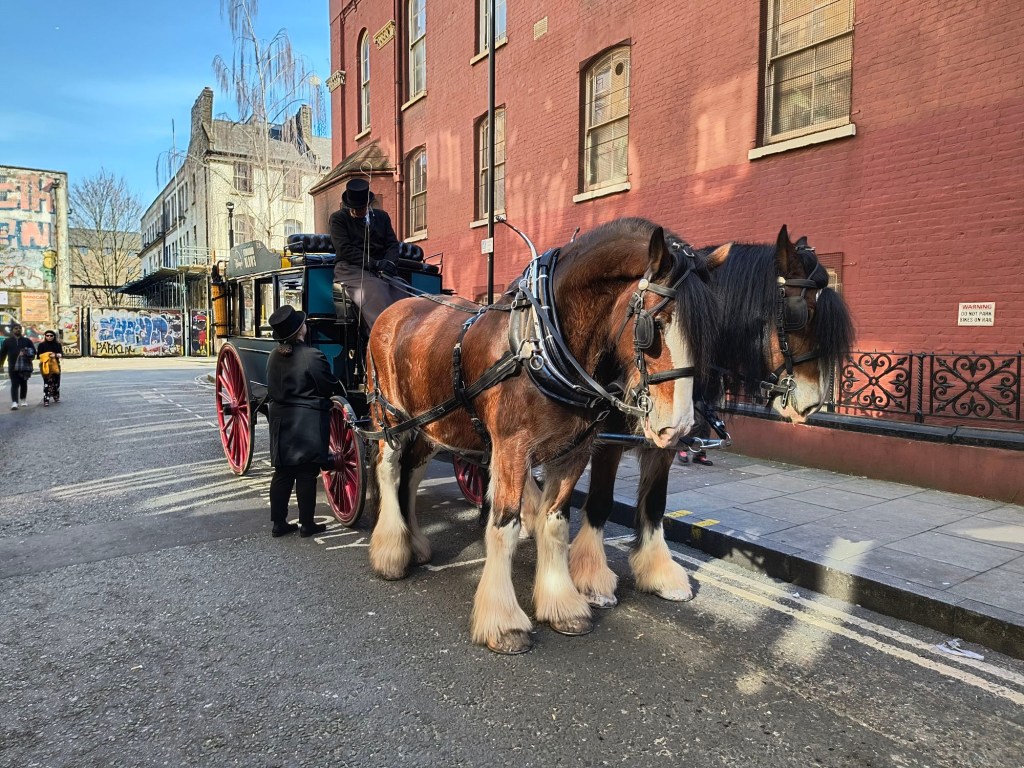
Last week I was the host of an incredibly fun activation event in East London organised by marketing agency Axe & Saw for Disney, involving Professor David Olusoga, history and culture journalists and influencers, rum punch, a horse-drawn Victorian omnibus, and a lot of Bethnal Green kids staring at us. Sorry about the manure, guys!
Many writers have used material from my blogs – some with credit, many without – and some have included links to this website in their posts, which have nudged people over here. But the vast majority of the 100,600 views so far have come from search engines. People across the UK, US, Australia and Europe have watched A Thousand Blows and typed “Hezekiah Moscow, true story” into Google. Sugar Goodson has hit a nice number too, and Alec Munroe and Punch Lewis have also got people interested.
It has been overwhelming, and I wanted to say thank you, thank you, thank you. When I started writing these blogs six years ago, it never crossed my mind that ALL THIS would happen.
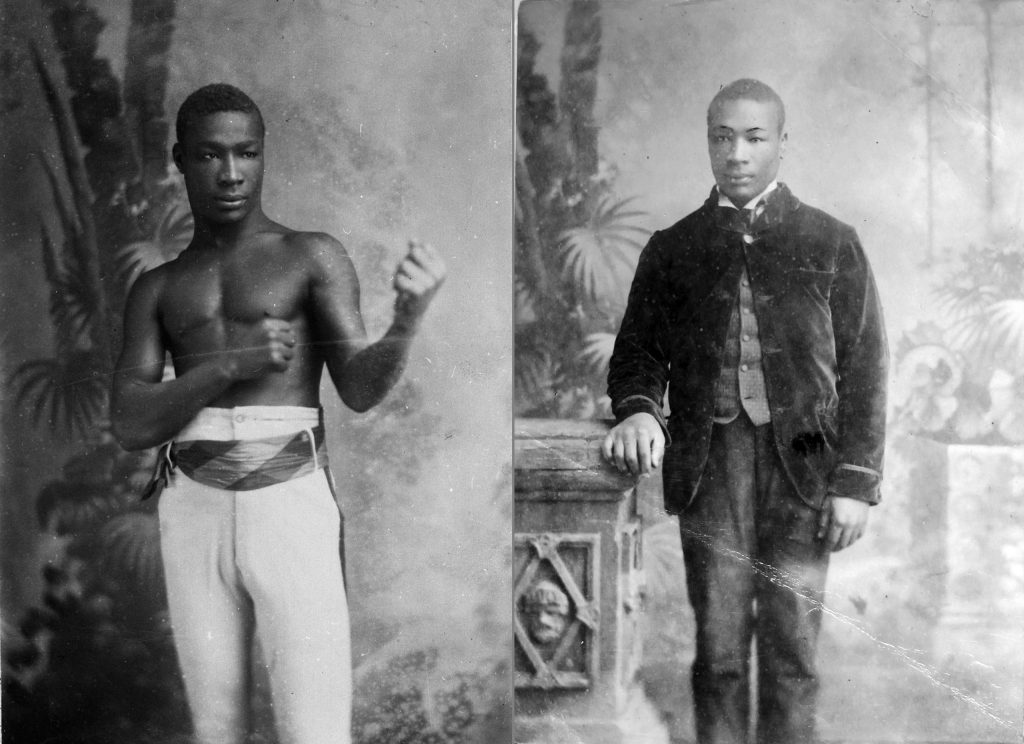
Hezekiah Moscow has long been a bit more than just a research subject for me. I’ve had a framed photograph of him in my bedroom for years. He’s a bit of an obsession. That thing they teach you on History courses at university about not getting too close to your subject matter because it skews your research? Chucked that idea out the window a long time ago.
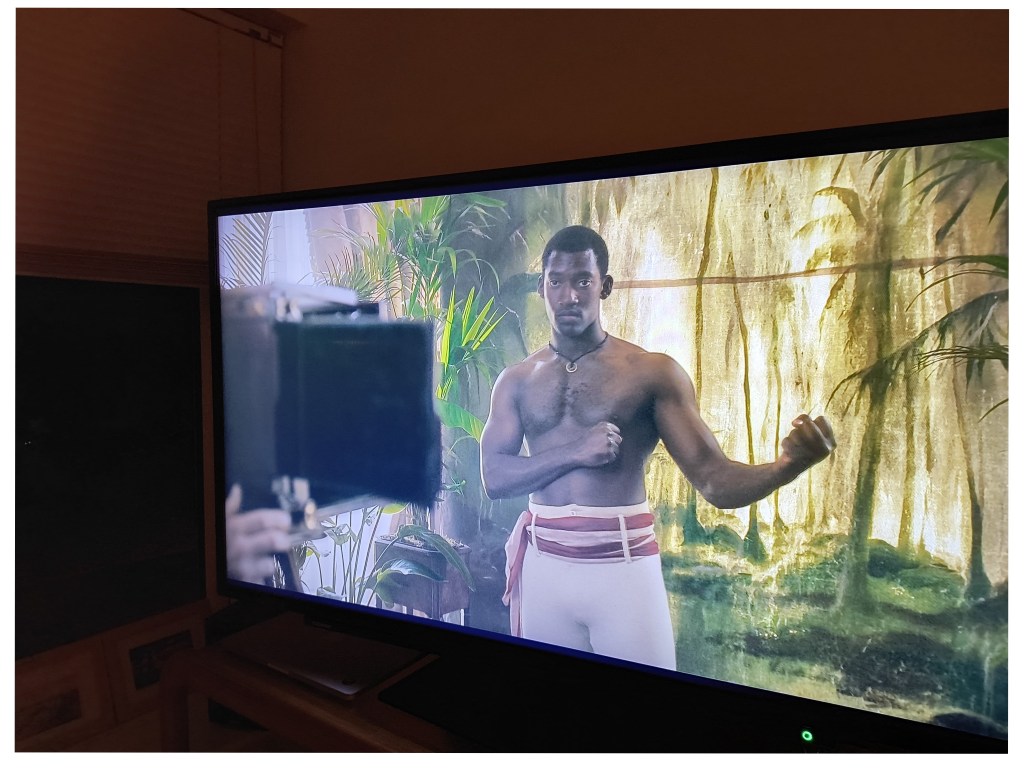
My research might have inspired or assisted in the creation of A Thousand Blows, for which it was licenced for use, but the Hezekiah that you will see in the show, played by Malachi Kirby, has been created by a team of brilliant writers. He is not the Hezekiah Moscow of my research.
As Professor David Olusoga said in a recent Guardian interview, underneath his very kind and welcome credit to me and my work:
“Hezekiah Moscow’s story is typical of what we have when it comes to Black Victorians in that it’s a fractured biography. We have flashes of detail and then ages of darkness.”
I might have spent six years on Hezekiah, and with many more months to come as I work on the book, but this is correct: there is a lot about him I do not know and I’m not sure will ever know.
One thing missing from Hezekiah’s story that we might find more of in others’ histories is his voice, his motivation, his feelings. We have very little evidence of his personality.
Taking the example of Plantagenet Green – Green was in court a few times as both a witness and a defendant and in both cases we get transcripts of his words published in the press. It’s not a lot, but we get some sense of his nature, particularly of his wit. We don’t have this with Hezekiah. Steven Knight, the writers, and Malachi have had to invent him. Malachi has said he spent a long time looking at The Photograph, trying to work out what was behind Hezekiah’s eyes. What was he thinking? Feeling? My research can’t answer that.
Having said this, what has happened over the course of the A Thousand Blows campaign is that the real facts, the basic bits of information I’ve dug for and pieced together about Hezekiah and the created Hezekiah and the storylines written for A Thousand Blows have become blurred. I want to use this blog to just set the record straight on a few truths, acknowledge some of the questions I’ve been asked or issues I’ve seen raised on social media, and myth bust about the man.
We don’t know that Hezekiah Moscow was Jamaican
In A Thousand Blows he arrives in London from Jamaica with his friend Alec Munroe. In real life, Munroe and Moscow met in London. Munroe was 12 or so years older and the 1881 census (and information published in newspapers after his death) state that he was Jamaican. The only documentation we have for Hezekiah’s place of birth is the 1891 census and it says only ‘West Indies’.
Over his 10 year boxing career in England, he is referred to as being from the Coral Strand, South American, and some other places and phrases. Most of the Black boxers I have researched in 1880s London have been from the US, Jamaica, Barbados, or born in Britain. Most of those from the US, Jamaica or Barbados have this on the census – so why didn’t Hezekiah? My feeling is that he might have come from a smaller Caribbean island, perhaps not known to the census taker, who just put down West Indies.
He might have been part Chinese
In A Thousand Blows, Moscow bonds with Chinese hotel proprietor, Mr Lao, by speaking in his language. In the story, he has a Chinese grandmother. We know that in real life, soon after arriving in London, Moscow started boxing and was furnished with the name Ching Hook or Ching Ghook by locals in the Blue Coat Boy. In Sporting Life newspaper reports across 1882 he is referred to as the Sable Chinaman and the Swarthy Celestial, only later being referred to more often than not as Black.
As a White woman, I can’t look at his photographs and tell you whether I think he was mixed heritage. But I have spoken to some people with Caribbean heritage who believe that he is. We also know that there were East Asian indentured servants on islands such as Guyana, Trinidad and Jamaica around the time of Moscow’s birth in the early 1860s. The two suggestions I put forward in my original blogs are that he was mixed heritage; or that a bunch of drunk guys in the pub simply thought he looked a bit Chinese, perhaps based on his facial features, and the nickname stuck. I’ve not found any further evidence for either theory since.
Hezekiah Moscow probably didn’t come to London to be a liontamer
Moscow started working in 1883, possibly earlier, as a bear, wolf, lion and hyena tamer at the East London Aquarium. We know him to have been there in at least 1883 and 1884. But there’s no evidence to say, as it has been suggested by Steven Knight and colleagues, that his actual motivation for coming here was to become a liontamer. That’s his motivation in A Thousand Blows.
In real life, Moscow was a teenage ship’s cabin boy, travelling the world and he arrived here at about the age of 19. There was a fashion for Black animal tamers and other performers at the time, and he managed to find work in this field quickly, but that doesn’t necessarily mean that was his dream.
Moscow wasn’t a big celebrity, or a ‘champion’
While becoming well known in London as a good lightweight boxer and later a trainer, as far afield as the Midlands, the real Moscow was never a real celebrity as we might know it today or see it in A Thousand Blows, where he rises the ranks and wins trophies. With no formal boxing board of control or similar in Britain at the time, who the ‘proper’ champions were was something of a casual arrangement, particularly in lower weight categories.
There were no segregated Black championship titles here in the 1880s as there were in America, but there was a sort of rivalry played out through the Sporting Life newspaper for a claim to be Black Champion, between men such as Moscow and Felix Scott. All the Black men vying for it were in completely different weight categories. In promotional adverts, Moscow was occasionally referred to as the Black Champion. The real Moscow was under 5ft 7 and weighed around 135lb (Malachi Kirby is around 6ft!). I’ve found no evidence to suggest he ever fought barefist matches – although the older Alec Munroe started his boxing career barefist.
I very much doubt that Hezekiah Moscow knew Mary Carr
But he did marry a White woman called Mary! Some A Thousand Blows viewers (or commenters on trailers and adverts, who probably won’t watch it) find the Black guy and White woman relationship challenging. As I’ve said before – interracial marriage was not illegal in Britain and many of the Black boxers I’ve researched married White women. Mary Ann Maddin became Mary or Marion Moscow in 1890 and the couple had a daughter, Eliza, in 1891. The London boxing world at this time, centred as it was on the mean streets of the East End, involved a lot of shady men (and probably some shady women) doing very shady things, but all interactions and schemes between the Forty Elephants and the boxers in A Thousand Blows are the writers’ creation.
There was no rivalry between Goodson and Moscow
The rivalry between Stephen Graham’s character, Henry ‘Sugar’ Goodson, and Malachi’s Moscow is the creation of A Thousand Blows’ writers. Descendants of Goodson have spent a long time piecing together his match history, and I’ve done the same with Moscow. There’s some suggestion that they might have sparred at an event in Mile End in October 1882 but that’s all. They definitely knew each other and they appear at the same events, in the same pubs (including the Blue Coat Boy). They were part of the same ‘pugilistic fraternity’, lived near each other and may well have been friends. While both were a similar height – Goodson 5ft 5 and 3/4 and Moscow likely somewhere similar, Goodson weighed 11st and was a middleweight (who entered at least one heavyweight tournament), and Moscow at 9 and a half stone was a lightweight.
Despite Steven Knight’s insistence in interviews that the real Moscow was a bareknuckle boxer: he wasn’t. Not sure who did that bit of research, but it wasn’t me! Moscow was always a gloved fighter, competing in tournaments, professional matches and music hall sparring. I have found one newspaper reference to him perhaps having a few bareknuckle fights as something of an experiment at the start of his career before deciding against the pursuit – but no real evidence that he did so. Goodson boxed mostly with the gloves, but was arrested on at least two occasions for prize-fighting either without gloves or small gloves.
If you have any other questions or queries, I would be happy to try and answer them, or you can dig into the original Moscow blogs below. Please note that most of these were written as I researched six years ago, will read like a ‘work in progress’, and there will be a lot missing!
- Where Did You Go, Hezekiah Moscow? The Life and Times of Ching Hook (Part I: 1882-87)
- Where Did You Go, Hezekiah Moscow? The Life and Times of Ching Hook (Part II: 1888-96)
- Where Did You Go, Hezekiah Moscow? (Part III: Some Final Thoughts)
- CHING GHOOK WANTED
- Where Did You Go, Hezekiah Moscow? (Part IV: Ching Ghook Found)
- A small and unreliable bit of information about the disappearance of Hezekiah Moscow
- Where Did You Go, Hezekiah Moscow? (Part V: A Thousand Blows announced by Disney+)
- A quick note on A Thousand Blows, Black boxers in 1880s London, and ‘woke history’
And please bear with me while I keep working on the book proposal. It has finally found its direction and will hopefully be finding a publisher very soon…

 Rediscovering the wrestlers and boxers of Late-Victorian London
Leave a comment