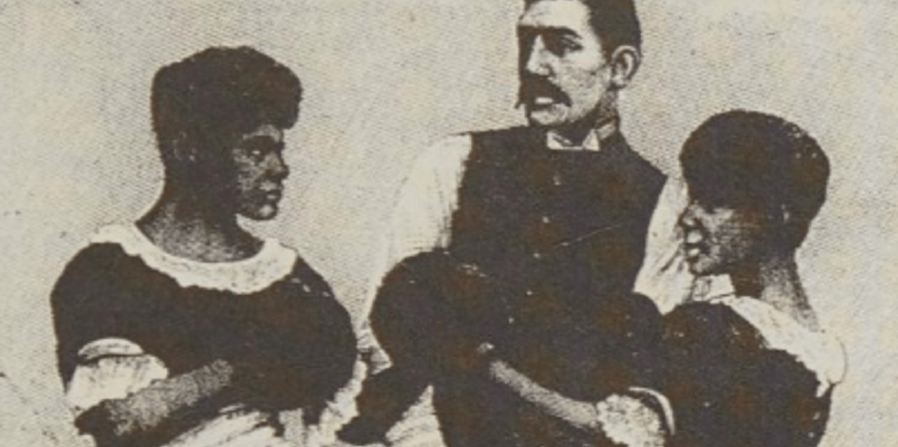
Ching Hook (Hezekiah Moscow), Alec Munroe, Jem Haines, Jack Davenport, Albert Pearce, ‘Meat Market Charlie’ Bartlett, Violet and Rosaline Mills, Jack Watson, J. Oliver, Tom Tully, Felix Scott, Charles Forster.
These are the names of just some of the Black boxers who were active, mostly in London, in the 1880s.
Bill Richmond, born into slavery in New York, came to England in 1777. The American-born Tom Molineaux arrived in Britain in 1809. Bob Travers, from the US, and Plantagenet Green, from Barbados, were prizefighters in the 1850s and ’60s. They were both still around in the ’80s, Travers as a pub landlord, Green as a boxing instructor to gentlemen and somewhat of a menace to his neighbour.
I have written at length about some of these men and women, and a couple have been researched by other historians. Scott was from Barbados, and settled in Liverpool. Haines, Davenport and Pearce were from the United States. Moscow was from somewhere in the Caribbean – he might have been of Chinese and Black mixed heritage. Munroe was from Jamaica. Forster’s origins aren’t known to me right now, but he was well known in Norwich and the East of England, and toured with Travelling Showman Alf Ball in the 1890s. Violet and Rosaline were most likely from the Caribbean, although they were billed as Mexican. Tully was English – born to a Black father and White mother in Portsmouth.

When I started my wrestling and boxing research in 2018 I never intended to specialise in researching and writing about Black boxers in 1880s London. I fell into it after realising that nobody seemed to have written on Hezekiah Moscow before. As I delved deeper into his story, and also saw how interested so many people were in his life as I wrote about it, the lives of other Black fighters in London at this time also grabbed my attention. They have been so little explored before. It was bizarre to me that nobody hadn’t.
Six years in, you can imagine how funny I found it to be told by a bunch of racists on Instagram to “do my research”.
Last week Disney+ released a full-length trailer for the forthcoming show A Thousand Blows.
It’s stunning.
Created by Steven Knight, and starring Malachi Kirby, Stephen Graham and Erin Doherty, the drama is set in the 1880s East End and very loosely inspired by the real characters of Hezekiah Moscow (Kirby), Alec Munroe (Francis Lovehall) and Sugar Goodson (Graham). Alongside the male boxing cast are a crew of badass lady pickpockets and swindlers based on the real 19th and 20th century gang, the Forty Thieves or Forty Elephants, led by Mary Carr (Doherty).
I am the boxing historian, or historical consultant on the show. I am also the first person (that I know of!) to have researched and publicly written on Moscow and Munroe, and the rights to this research were bought by the production company, used by the writers, and read by some of the actors. I provided detailed feedback on many iterations of every episode’s scripts, trying to ensure historical accuracy within reason.
It is, however, a drama, not a documentary. The storylines and many biographical details for the men portrayed have been dreamt up by the brilliant A Thousand Blows creative team. The inspiration comes from real lives. Sugar Goodson, Treacle Goodson, Munroe, Moscow, Punch Lewis, Mary Carr, were real people.
The vast majority of the many thousands of people who saw the trailer commented with excitement: a LOT of people can’t wait to see this beautiful thing I’m incredibly proud to have had a hand in creating.
But then there was this:
“Woke nonsense”
“There were only white English people at the time, so historically incorrect as it’s usually the case nowadays!”
“Another interracial relationship for the sake of it”
“London was 99% white during this period – rewrite your own history all you want but leave ours alone!”
“Both the secondary casting are too overly diverse for the period. It’s disingenuous to portray this period as overly diverse, considering it was stil 99.9% native homogenous up until 80 years ago”
“…this obsession with inclusion regardless of accuracy, it really aggravates people”
The two-minute long trailer includes several scenes with Lovehall as Munroe and Kirby as Moscow, two Black men, who really existed, and were boxers in London in the 1880s, and a quick shot of a mixed heritage Black actor who plays Miss La La – a real mixed heritage Black woman and aerialist who toured the world, including London in the 1880s.
Actor Stephen Graham is mixed heritage – he has one Black grandparent – but plays a White character, Sugar Goodson, in the show. One of the female gang is played by actor Morgan Hilaire. I am not sure of her ethnicity, but she is a woman of colour.
Hong Kong-British actor Jason Tobin plays Lao, a Chinese character not based on a real person, but certainly representative of the fact that the 1880s saw a wave of migration from China to London’s East End, with many Chinese people also settling in Liverpool in the previous decades too.
There might also be some people of colour in the background, perhaps in a street scene, or at a boxing match in the Blue Coat Boy saloon.
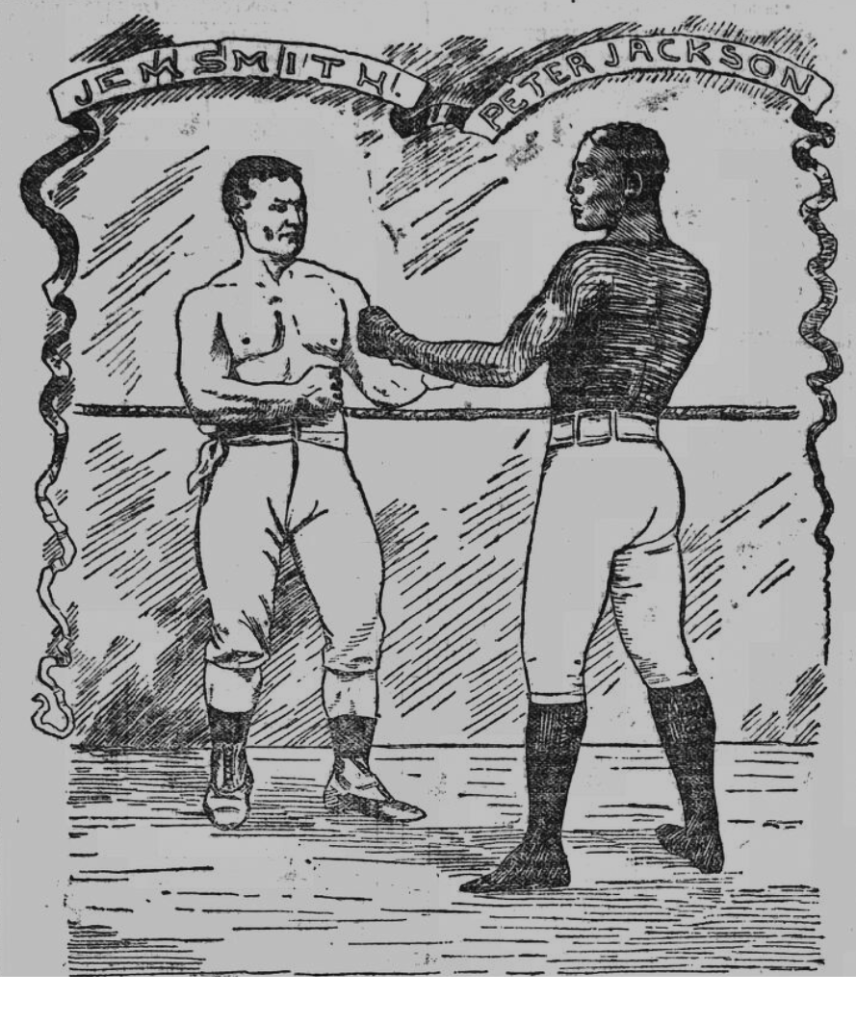
In the 1880s, the non-White population of London was small, relative to the White population, and relative to today. We don’t know exactly how many Black or Asian people lived in the city, but estimates are currently around the 10,000 mark, I believe. There were Travellers, Irish, and a whole lot of Jewish people arriving in the 1880s, and long before, and after, too. Many would have been fairly recent arrivals, first generation, others the children or grandchildren of those who had come before them.
Alongside the boxers, the lion tamers, and other entertainers that I have looked at in my research so far, there were thousands of other Black and Asian people in late-Victorian Britain, predominantly in London but also in other parts of the country. They had a diverse range of jobs. They were sometimes poor, sometimes wealthier, sometimes a bit in between. They were talented, or very normal, pillars of society or very, very, flawed (see my blogs on Haines and Davenport…): just like the White community around them. And they sometimes had relationships with and married White people, and had children with them. Sorry to break it to you, Instagram racists! American readers should note: mixed marriages have never been illegal in Britain.
I have been researching the lives of Black boxers (who were sometimes also Music Hall entertainers) for six years but I am not an expert on migration. I’ve done my best, and continue to read and research the work of others, to better understand the context in which the boxers arrived, why, and understand how they lived. I’ve included a short reading list for you at the bottom of this article in the hope that you would do the same.
How can the people posting on Instagram – largely through anonymous accounts – watch a trailer for a show inspired by real people – whose executive producer Professor David Olusoga, is an expert in Black British and migration histories – and call it inaccurate? How can they call it over-representative, when in fact the trailer only actually shows a handful of people of colour?
I can almost excuse ignorance: Black British History and Black Victorians are woefully untaught or under-taught in schools here in Britain. In the 1990s and 2000s I learned a little about Civil Rights in the United States in the 1960s during History A-Level. I don’t think much has changed. I knew very little else until starting my own research six years ago. This needs to change.
One of the proudest moments of my research journey so far has been working with the National Archives. Their Education team developed my work on Moscow, Munroe, and Moscow’s White English-Irish wife into an education pack for GCSE-level pupils. The kids go away after, and they Google. They find out more. They read my blog, and look for other sources of information too. Black and Asian kids who know a little bit about Windrush but not much else, get to see that they have a long, long, fascinating past here and are a part of British history. They get excited about it. I really, really, hope that some of them go on to study History at A-Level and university as a result.
We can excuse ignorance, but outright racism and a blinkered refusal to acknowledge that the people who inspired the show actually existed is just not acceptable.
Tiresome as it might be, I’ve tried to argue back on Instagram, to correct misconceptions that the ignorant seem to have. I’m not sure that it’s going to have much of a cut through for the sort of people who think the silly little phrase “woke nonsense” is a good argument against anything.
“Woke” actually means representative of diversity. It means based on facts rather than stereotypes and entrenched out-dated views. Woke means we opened our eyes, did our research, and it inspired a TV show that is , as I said, not a documentary. But it IS representative of the East End boxing world of the 1880s and the increasingly diverse East End as a whole.
Nobody is saying that Black boxers were the majority. Nobody is saying there was a huge Black and Asian population in London, at all. But they were there, and always have been.
It might not persuade the anonymous racists on Instagram but I really hope that A Thousand Blows, alongside providing a lot of fun and entertainment, opens a few eyes and gets people thinking and talking about history, what they think they know, and what might actually be the truth.
David Olusoga – Black and British: A Forgotten History (2016)
David Olusoga – The World’s War: Forgotten Soldiers of Empire (2014)
John Woolf and Keshia N. Abraham – Black Victorians: Hidden in History (2022)
Louis Moore – I Fight for a Living: Boxing and the Battle for Black Manhood, 1880-1915 (2017)
Hakim Adi – Black British History: New Perspectives (2019)
Hakim Adi – African and Caribbean People in Britain: A History (2023)
Gretchen Gerzina – Black England: A Forgotten Georgian History (2023)
National Archives – The Boxers of Whitechapel
National Archives – Black boxers and the colour bar


 Rediscovering the wrestlers and boxers of Late-Victorian London
Leave a reply to Jimmy Cancel reply